|
|
|
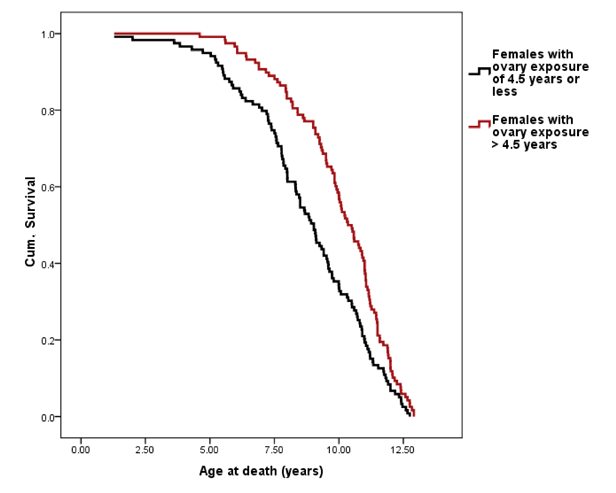
Supplementary Figure 2. Increased Lifetime Ovary Exposure is Associated with Increased Longevity in 237 Female Rottweiler Dogs. To further evaluate the association between ovaries and longevity, we studied an additional cohort of Rottweiler dogs. Information on medical history, age at death, and cause of death of dogs living in North America was collected by questionnaire and telephone interviews with pet owners and veterinarians. Sufficient data to conduct survival analysis were available for 237 females who died between the ages of 1.3 and 12.9 years. The figure shows the two survival curves for females subdivided on the basis of median age at ovariectomy for this cohort (4.5 years). Analysis of the survival curves by log-rank test shows superior survival in dogs with longer ovary exposure (p < 0.0001). Median survival was 10.4 years for females with more than 4.5 years of ovary exposure; median survival was only 9.0 years in females with shorter ovary exposure. Cox-proportional hazards analysis revealed that females in this cohort that kept their ovaries for at least 4.5 years had a 37% reduction in mortality (Hazard Ratio, 95% CI = 0.63, 0.49-0.82) compared to dogs with shorter ovary exposure. This positive association between ovary exposure and increased longevity mirrors our results from exceptionally long-lived female Rottweiler dogs (≥ 13 years old) showing longer lifetime ovary exposure increases likelihood of achieving exceptional longevity (See text and Table 2). |